
A haul-out is the one time each year you can see the whole boat. Most yards will sell you an antifoul; the value is in everything else that can only be checked, serviced or replaced while she is on the hardstand. This is the standard annual scope Marine HQ runs on every managed motor yacht, in the order the yard works through it, with what to ask for at each step.
Key facts
- When — once a year in Gold Coast water, timed with the antifoul
- How long — three to five days for antifoul only; one to two weeks for the full annual scope
- Book — four to six weeks ahead; longer heading into summer and before the May boat show
- Start with — a pre-haul sea trial, so problems are measured under load before she comes out
- Rule — nothing is added to the scope without a priced line and your approval
- Record — photographs of everything found, and the paint, litres and anode sizes written down for next year
Before the lift: the sea trial
Once she is on blocks nothing can be run under load, so the diagnostic happens on the way to the yard. A short run at cruise with the engine room open tells you what the annual service needs to include.
- Engine and gearbox temperatures at cruise and at wide-open throttle, against last year’s.
- Exhaust colour and smoke on acceleration.
- Vibration through the rev range, which points at props, shafts, cutless bearings or mounts.
- Shaft-seal drip rate at speed and at rest.
- Stabiliser, thruster and steering behaviour, and any hydraulic noise.
- A note of the engine and generator hours, because the service schedule runs on hours or calendar, whichever comes first.
Hull and underwater
- Haul out and high-pressure wash. Done on a wash-down pad that captures the run-off; the yard's environmental levy pays for that. Photograph the hull before the wash if the growth tells a story.
- Full hull inspection and report. Blisters, moisture readings on an older hull, gelcoat damage, keel and chine condition. This is the step that decides whether the antifoul is a straight recoat or a bigger job.
- Antifoul, full application. Two coats, a third on the waterline and leading edges, the brand and litres named in the quote. The whole antifouling job, prices included, is in our antifouling guide.
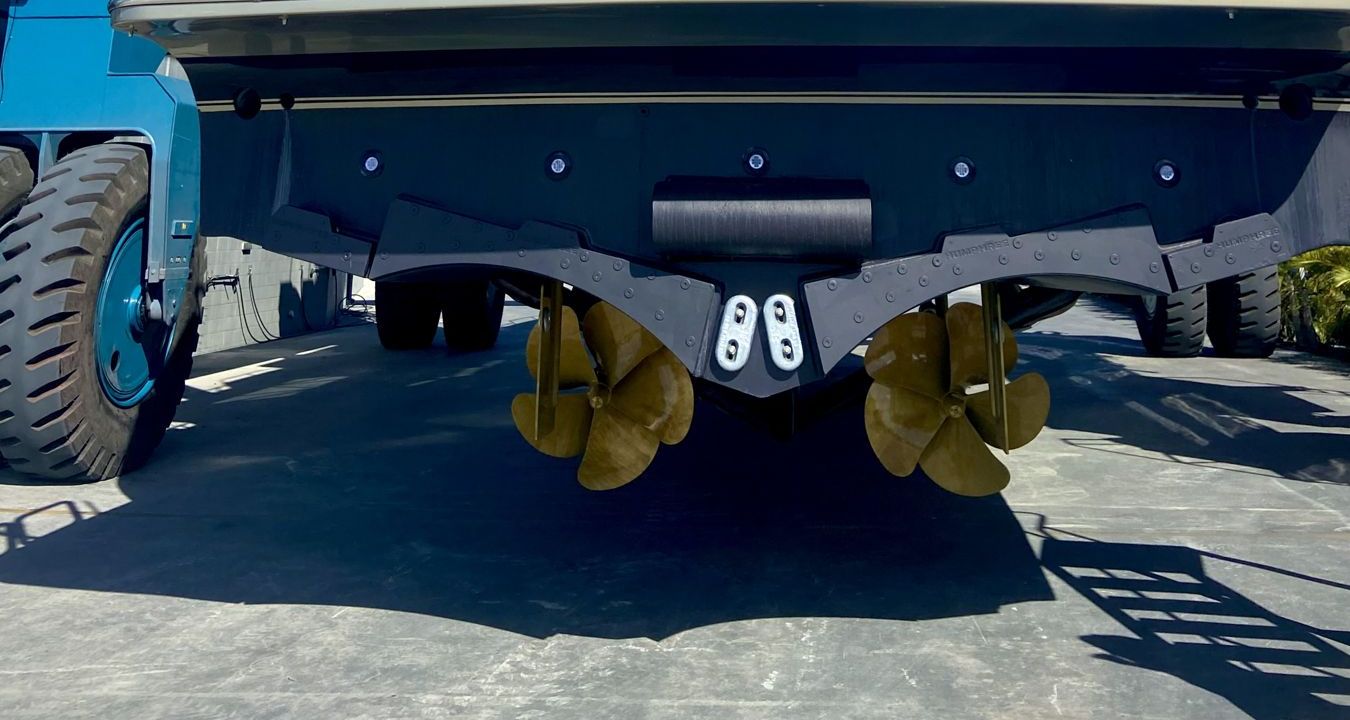
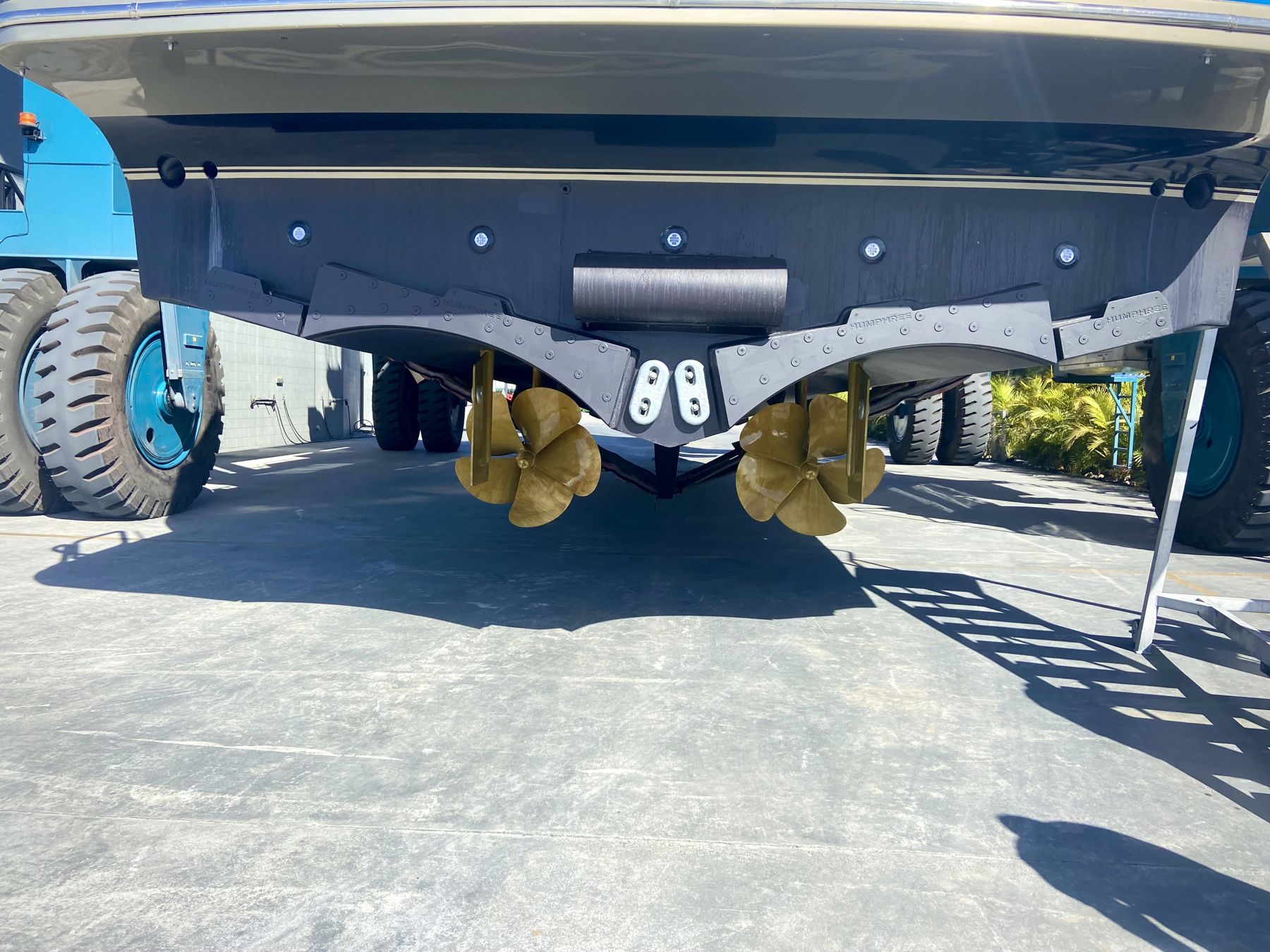
- Anodes renewed. Hull, shaft, rudder and trim tabs. Photograph the old ones next to the new; how far they have gone tells you whether the boat's bonding is doing its job.
- Propellers. Inspect, clean, check for corrosion and dings, Propspeed. A prop scan and repitch is a separate job if the sea trial showed vibration.
- Shafts, cutless bearings, P-brackets and stern glands. Lift the shaft and feel for play. A worn cutless bearing is the most common thing added to a scope on the hardstand.
- Through-hulls and seacocks. Every one exercised, serviced and checked for corrosion. A seacock that will not turn is a boat that cannot be saved from a burst hose.
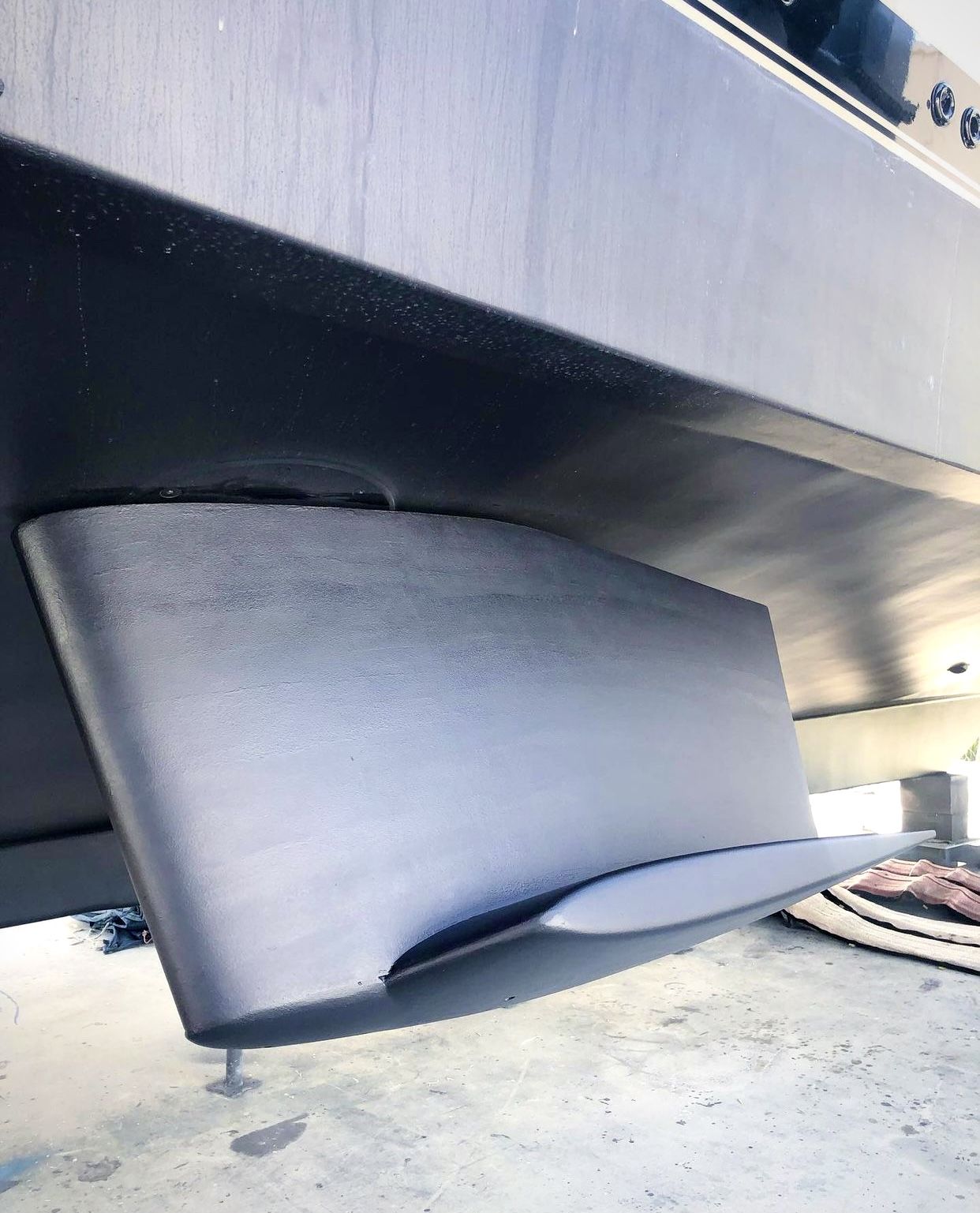
- Rudders and bearings. Check for play and for water in the rudder.
- Thruster tunnels. Cleaned, anodes replaced, props checked.
Topsides and presentation
While she is out and the yard has staging up, the hull is at the right height for the work that is awkward in the water.
- Topsides cut, polish and wax.
- Hull and superstructure detail.
- Teak decks cleaned, caulking inspected, treated.
- Stainless and metalwork polished.
- Full interior detail, if it is scheduled for this visit.
Engines and machinery
The annual services fall due here because the boat is idle and the trades are on site. Volvo Penta, MAN, MTU and Caterpillar all set intervals on hours or calendar time, whichever comes first, so a low-hours year is still a service year.
- Main engines: annual service, oil and filters, plus whatever the hours call for. The 500-hour and 1,000-hour services add injectors, aftercoolers and heat exchangers and should be quoted before the lift, not discovered during it.
- Generators: annual service.
- Raw-water impellers renewed.
- Belts, hoses and coolant inspected or renewed.
- Sea strainers cleaned.
- Engine mounts and bilges inspected.
Stabilisers, thrusters and steering
- Stabiliser annual service, Seakeeper or fin. On a fin system the fin seals and actuators are checked from outside while she is out.
- Bow and stern thrusters serviced, anodes replaced.
- Steering and hydraulics inspected and bled.
Safety and compliance
Out of the water is the natural point to bring every certificate and expiry into line, because the gear is being handled anyway.
- Life raft serviced and recertified.
- EPIRB battery checked and the AMSA registration current.
- Fire extinguishers and engine-room suppression serviced and tagged.
- Flares checked for expiry and replaced.
- Life jackets and safety gear inspected.
- Bilge pumps, float switches and the high-water alarm tested.
- First-aid kit restocked.
Worth knowing
Keep the paint invoice, the slipway receipt and the anode sizes. The national biofouling guidelines ask for them, insurers like them at claim time, and next year’s yard will quote faster with them.
Electrical and electronics
- Battery banks load-tested and inspected.
- Navigation, anchor and deck lights tested.
- Electronics and multifunction displays updated, software and charts.
- Shore power, inverter and charger checked.
- Wiring and connections inspected, especially in the engine room and lazarette.
Systems and comfort
- Air-conditioning serviced and gas checked.
- Watermaker serviced and filters changed, if fitted.
- Fresh, grey and black water systems and the calorifier checked.
- Heads and sanitation serviced.
- Gas system leak-tested, if fitted.
Tender and toys
- Tender engine serviced and hull checked.
- Davit and lifting gear inspected and load-tested.
- Water toys and equipment checked.
What goes wrong, and how to stop it
- The scope grows on the hardstand. It always does; the question is whether each addition arrives as a priced line for your approval or as a surprise on the invoice. Insist on the former.
- The paint goes on before the inspection is finished. Then the seacock that needed replacing gets painted over. Inspection first, paint last.
- Nobody photographs anything. A photo of the old anode, the worn bearing and the blister is what lets you approve work from your phone and lets the next yard see what was done.
- The relaunch is “when it’s done”. Book it. A boat waiting on one part sits on the hardstand at a daily rate.
- The schedule lives in someone’s head. Write down the hours, the paint, the litres, the anode sizes and the dates, so next year’s scope starts from a record rather than a memory.
What we do
This checklist is Marine HQ’s baseline; every managed yacht also carries her own additional items for her make, systems and age on her individual schedule. We run the sea trial, write the scope, get every line quoted, book the lift and the relaunch, and have someone on the hardstand while the work is done. Every finding is photographed into the owner’s MyYacht app, nothing proceeds without approval of the scope and quote, and the record goes straight into her maintenance history so next year is booked before it is due. If hers is coming up, call 0439 748 387 or email yachtsupport@marinehq.com.au.